Cairns Concrete Crack Repair Contractors
Call (07) 4043 7499Concrete Crack Repair in Cairns
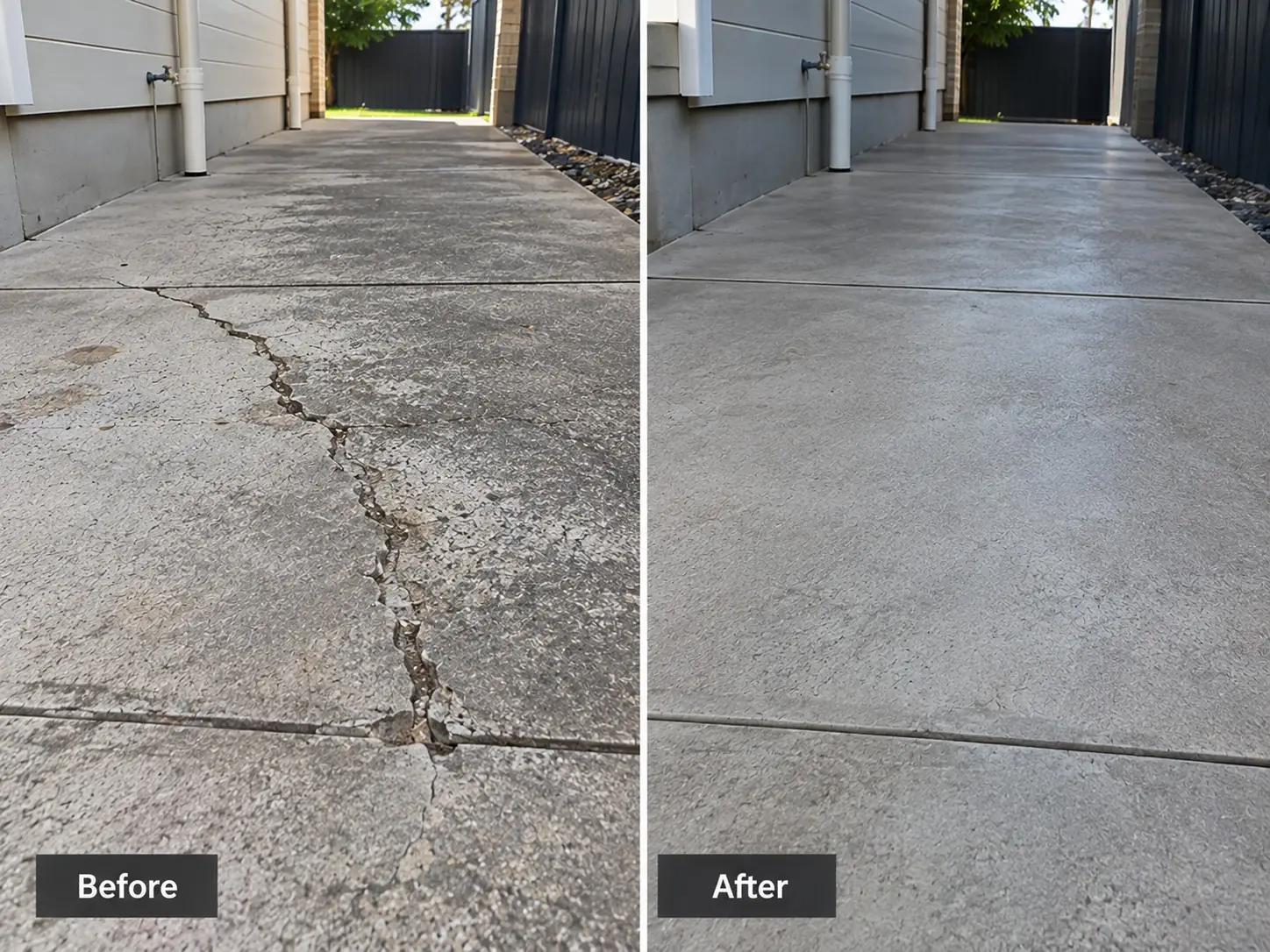
Prompt concrete crack repair in Cairns keeps minor cracks from growing and letting water into your slab. Cracks commonly form through shrinkage, ground movement, tree roots and heavy loads, and in our wet climate moisture can quickly make them worse. We inspect each individual crack, work out why it formed and use the right method to seal, fill or stitch it so your concrete stays safe, sound and looking great.
Depending on the crack, we use flexible sealants, epoxy or cementitious repair materials, then finish the area to blend with the surrounding surface. For larger problems, we can recommend additional work such as levelling or drainage improvements. Repairing cracks early protects your investment, saves money and helps avoid dangerous trip hazards. Contact us today to book an inspection and get clear advice and a quote for your concrete crack repair.
Concrete Crack Repair Services in Cairns
Crazing and Shrinkage Cracks
Shrinkage cracks and crazing on driveways, patios and paths blown out and cleaned, then filled with a sealant chosen to suit the width of the gap. It is a quick, inexpensive job that keeps dirt, weeds and ants out of the crack and tidies up the surface.
Crack Stitching With Steel
Where a crack has split a slab into separate pieces, we can stitch it back together with steel bars or staples set across the line in epoxy. This restores load transfer between the two sides and suits driveways, garage floors and slabs on the softer ground of the Barron delta.
Lifted Edges and Trip Lips
Cracks where one side has risen above the other, often from tree roots or ground movement, are ground back flush or cut out and re-poured. On footpaths, shop entries and shared driveways this removes the lip that catches toes, wheelie bins and pram wheels.
Sealing Leaking Wall Cracks
Cracks in retaining walls, basement walls and concrete tanks that let moisture through, sealed with an injected polyurethane that expands to fill the void. It suits damp or seeping cracks where a rigid repair would not bond, and helps stop the staining that follows constant seepage.
Crack Prep Before Floor Coatings
Cracks in garage, shed and workshop floors repaired and ground flush before an epoxy or flake coating goes down. Preparing them properly stops the new coating splitting along the old line, and leaves a floor smooth enough for creepers, tool trolleys and bare feet.
Spalling Over Rusted Steel
Concrete that has popped or flaked over rusting reinforcement, common near the beaches where salt air reaches the steel. We break back to sound concrete, clean and treat the bars, then rebuild the area with a repair mortar shaped to match the surrounding surface.
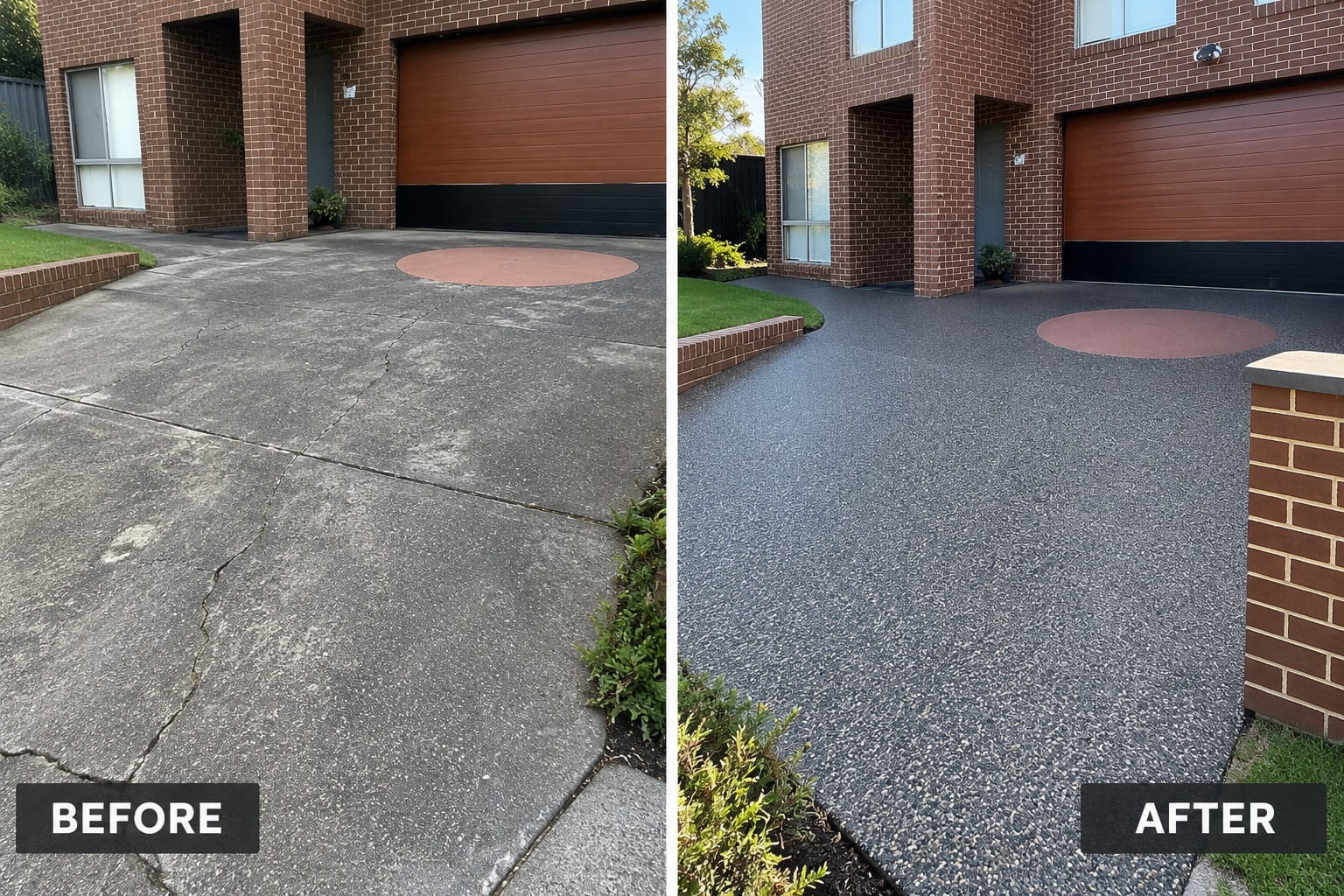
Hire Concrete Crack Repair Contractors in Cairns: Three Easy First Steps
A hairline crack is easy to ignore until water starts finding its way underneath. If you have spotted cracks in a driveway, path or slab, start with any of the options below so we can work out what is causing them.
- Photograph it with a ruler: Lay a ruler across the widest point and take a close shot plus a wider one so we can see the overall pattern.
- Track any movement: Draw pencil marks at each end of the crack and note whether it grows over a few weeks, then tell us what you see.
- Ask for an on-site check: We visit to look at drainage, tree roots and slab edges, then explain whether sealing, injection or replacement makes sense.
Many cracks around Cairns start when reactive clay swells in the wet and shrinks again in the dry, and the right repair depends on knowing that. We give you straight advice, even when the answer is simply to keep an eye on it. Message or call us to organise your free quote.
What Sets Our Concrete Crack Repair Team Apart in Cairns
Active Or Dormant, Checked First
A crack that is still moving needs a very different repair from one that has settled. Rigid fillers in a live crack soon break away, so we read the crack pattern, compare it with any earlier photos and, if needed, wait to confirm before committing.
Root Cause Before Filler
Cracks are a symptom. A downpipe emptying beside the slab, the roots of a big fig, a washed-out edge or a slab poured with too few joints can all be behind it, and surface filler alone will not deal with any of those.
Cracks Routed For A Proper Seal
Sealant smeared over a narrow crack often peels off within months. Where it suits, we rout the crack to form a clean channel, add backing rod in wider gaps and fill to the right depth, so the sealant can flex without tearing.
Repairs Timed For Dry Spells
Most sealants and epoxies need a clean, dry crack to bond properly, which can be tricky in the wet season. We book repairs around the forecast, blow out moisture and debris before filling, and wait for a dry window rather than rushing it.
Honest About How It Will Look
A repaired crack will still show as a line, however neat the work. If a uniform appearance matters to you, we will say so at the start and explain resurfacing options, rather than promising a repair that disappears.
Joints And Drainage Fixed Too
If a missing control joint or water flowing under the slab started the crack, we correct that during the same visit, by cutting a new joint or redirecting runoff. Leave the cause in place and another crack usually appears nearby.
Concrete Works in Cairns



Concrete Crack Repair FAQs
What Cairns owners ask about cracked concrete: telling harmless cracks from serious ones, how visible a repair is, epoxy injection and cracks that return.
Usually it isn't. Concrete shrinks as it dries, and fine hairline cracks are the normal way it releases that stress, which is the reason control joints are cut in the first place. Cracks like that are only a cosmetic issue and seldom change. Look more closely if a gap is wide enough to slip a coin into, if one edge has dropped or lifted, if it is clearly getting longer or wider, or if it runs through a retaining wall, footing or house slab. Those point to movement or a structural problem, and finding the cause early nearly always makes the fix cheaper. If in doubt, a photo is a good first step.
Yes, to some degree, and it is better to know that from the start. A repair turns an open crack into a sealed one, but the filler will not exactly match the colour and texture of concrete that has been weathering for years. A careful repair is much less obvious than the original crack, though you will still see it if you look closely. When appearance is the priority, the dependable approach is to fix the crack properly and then apply a bonded resurfacing coat over the whole area, leaving a single, uniform finish. We can price both options so you can compare.
It is a structural repair for cracks that have stopped moving. Small injection ports are fixed along the crack, the surface is sealed between them, and low-viscosity epoxy is pumped in under pressure until the crack is filled from top to bottom, not just at the surface. Once cured, the epoxy bonds the two sides firmly, so the concrete carries load as a single piece again. The drawback is its stiffness. In a crack that still opens and closes with seasonal ground movement, a new crack simply forms next to the repair, so a flexible method is the better choice there.
Most likely because whatever caused it has not been fixed. Topping up the filler while the underlying fault remains only treats the symptom. In and around Cairns the common causes are clay soils that expand in the wet and contract in the dry, a poorly compacted base, stormwater running under the slab and carrying fine material away, tree roots, and slabs poured without enough steel or control joints. While any of those remain, expect the crack to reopen or a fresh one to start close by. That is why we look at drainage, roots and the slab edges before recommending a repair method.
In most cases, fix it sooner, especially if the wet season is a few months away. Water finds its way into an open crack, and during heavy rain that water can carry fine material out from under the slab, leaving edges unsupported and the crack wider. Moisture sitting in the crack also encourages mould and algae, and once moisture gets to the steel mesh it rusts, swells and breaks the concrete from within, turning a small sealing job into a far bigger repair. Early sealing is inexpensive. The main exception is when a crack's movement needs monitoring before we pick a method, which normally takes weeks, not months.
Other services you might need

Want a quote within 24 hours?
Snap a clear photo of the crack with a coin beside it and send it through for our opinion.